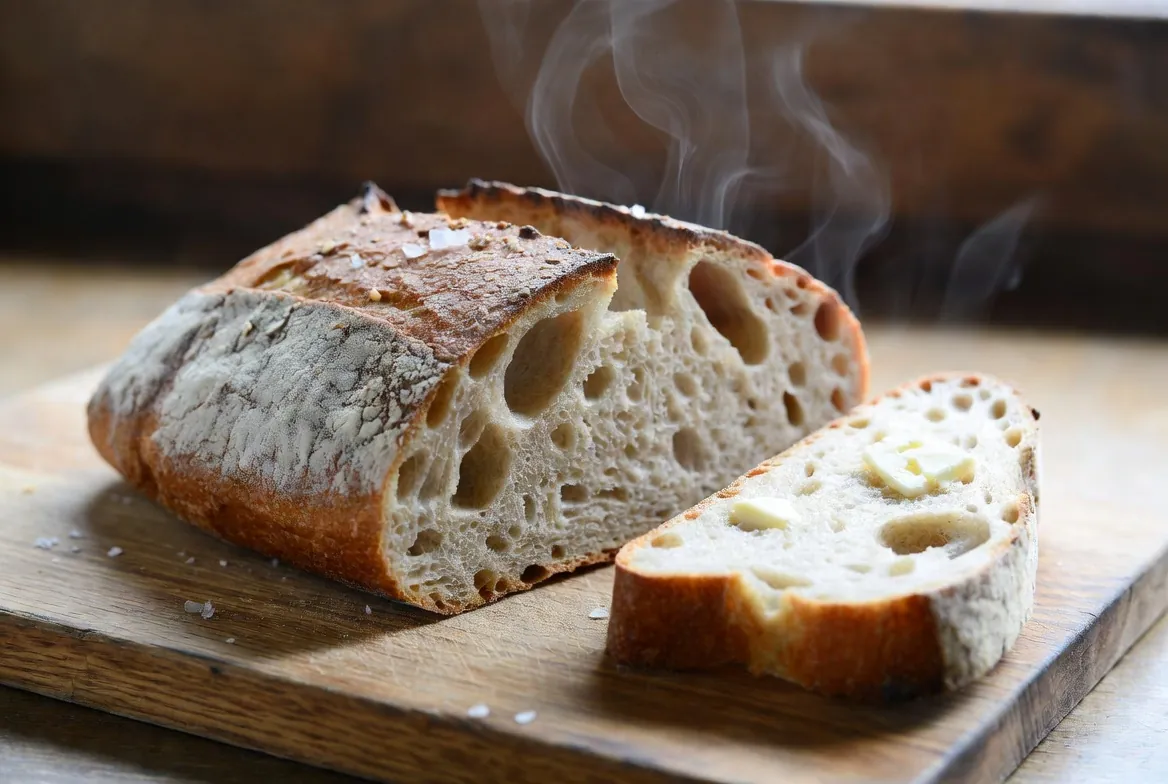
You do not need to be a baker to tell the difference. You need a few tells and one or two questions.
This page is about practices, not about any particular shop. We are describing how to read a counter, not accusing the people behind it.
The tells
You can meet the person who made it. The bread is mixed, proved and baked on site, often that morning. The ingredients are a short list told plainly. It goes stale within a few days, because it is only flour, water and salt. It changes from day to day.
There may be no baker on site, only an oven and a delivery. The dough is frozen factory product, flashed off in store. Additives can slip in as undeclared processing aids. The loaf stays soft for an unusually long time. The same product appears identically every single day.
The language to watch
Some phrases are doing more work than they look.
- “Freshly baked” can be true of bread that was made in a factory weeks ago and frozen. Fresh from the oven is not the same as freshly made.
- “Baked in store” almost always means finished in store, from dough made elsewhere. It is precisely worded to sound like more than it is.
- “Artisan” and “craft” are unregulated. Anyone can print them on a bag.
- “Sourdough” with yeast in the ingredients is not leavened the traditional way. The trade nickname for it is sourfaux.
None of these phrases are illegal. That is exactly why they are worth understanding.
The questions to ask
You only really need one, and it is completely polite:
Is this baked here from scratch, or finished from frozen?
A scratch baker will light up and tell you about their starter, their flour and their overnight prove. If the answer is vague, you have your answer too.
A useful follow-up: what is in this loaf? A real baker can tell you in a sentence.
The stale test
Buy a loaf and leave it on the side. Real bread, made from flour, water and salt, firms up and stales within a few days. That is not a flaw. It is the absence of the additives that keep industrial bread soft for a fortnight. If a loaf stays pillowy for two weeks, something is keeping it that way.
Then do the easy thing
Once you can spot the difference, you do not have to play detective every time. Find a baker on Honest Bread and the work is already done. Every bakery here bakes from scratch on its own premises, and we say whether the baker has confirmed it or we sourced it from public record.