There is a quiet swap that happened on the British and Irish high street, and most of us never noticed it.
Shops that once mixed and baked their own bread started buying it in. Frozen dough, made in a factory hundreds of miles away, arrives on a pallet. It gets slid into an oven at the back of the shop, browned off, and set out warm under a sign that says freshly baked. The smell is real. The bread is not made there. It is finished there.
That is legal. It is common. And it is sold with language carefully chosen to make you think a baker was involved.
Honest Bread exists to draw a clear line and point you to the people on the right side of it.
The three rules
A bakery earns a place in this directory only if it clears all three. The same line, everywhere, every time.
1. Baked on the premises, from scratch
The dough is mixed and baked in the bakery’s own kitchen. Not trucked in frozen. Not par-baked elsewhere and finished on site. Not assembled from a factory tray. A real baker starts with flour and ends with a loaf, in one place.
2. No additives, no processing aids
The bread is made from flour, water, salt and time. No emulsifiers, no enzymes, no dough conditioners, no improvers. The catch is that many additives are classed as “processing aids” and never have to appear on a label, so a loaf can look clean and still be propped up. Honest bakers do not need the props.
3. Independent and accountable
There is a real person you could meet, who would tell you exactly what is in a loaf and how it was made. Family bakeries, microbakeries, market stalls, high-street stalwarts. Not a logistics operation in an apron.
Why it matters
It matters because of what gets lost when bread becomes a reheated product.
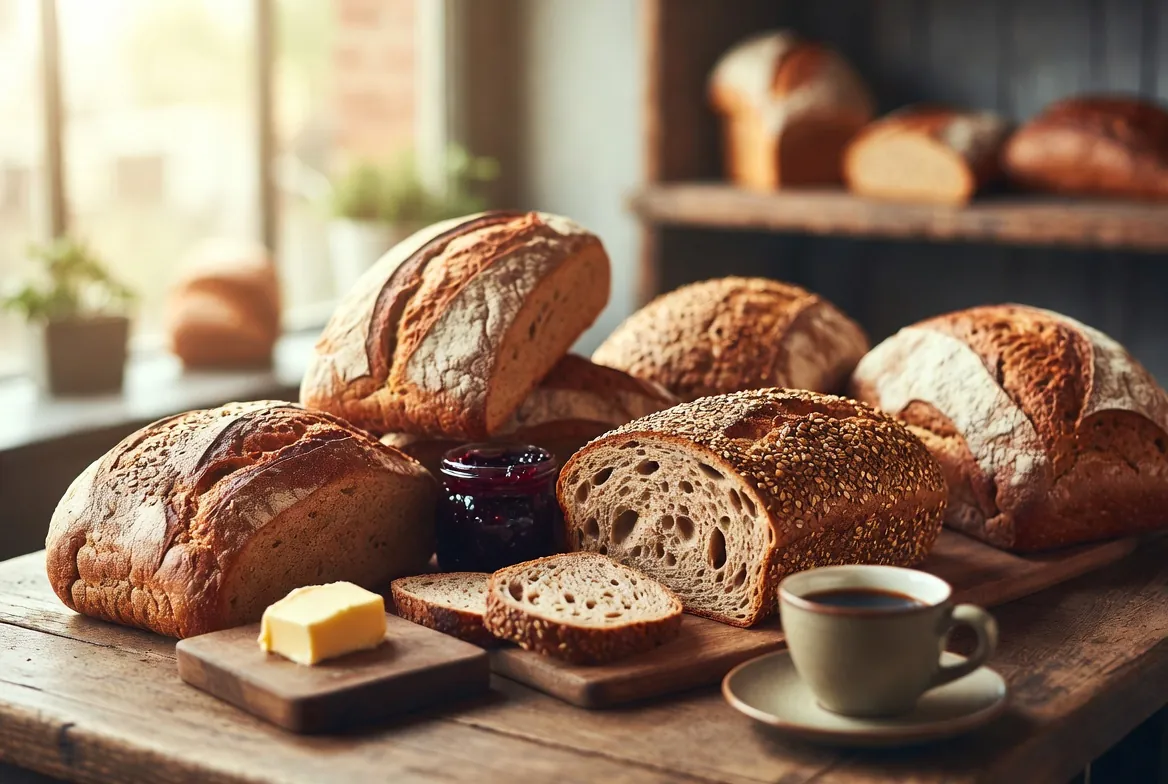
Real bread is made from a short list of ingredients you could read aloud. It is fermented slowly, which is part of why a proper loaf goes stale in a few days rather than staying soft for a fortnight. It is different from one day to the next, because it was made by a person and not stamped out to a specification. It supports a baker who lives near you rather than a freezer in a distribution centre.
None of that survives the swap to bake-off. The crust does, for a few hours. The rest is gone.
The loaf-tanning salon
We have a phrase for a shop that only browns off bought-in dough: a loaf-tanning salon. It is a tan, not a bake.
We use that phrase in the abstract, as a way of describing a practice, and never as a label thrown at a named business. Plenty of shops sell bought-in bread perfectly openly, and that is their right. Our job is not to accuse anyone. It is to celebrate the bakers who still do the hard, slow, real version, and to make them easy to find.
How we are different from the Real Bread Campaign
If you care about this, you should also know about the Real Bread Campaign, run by the charity Sustain. They have spent years arguing for honest labelling, including a proposed Honest Crust Act that would stop misleading terms like “fresh” and “sourdough” being used loosely.
We are not them, and we are not part of their scheme. “Real Bread”, the Loaf Mark and #RealBread are theirs. Honest Bread is a separate, independent directory with its own standard and its own pledge. We point to their work because it is good, not because we are connected to it.
What you can do
If you bake the real thing, add or claim your bakery and sign the pledge. It is free.
If you just want a proper loaf, find an honest baker near you. That is what this whole thing is for.