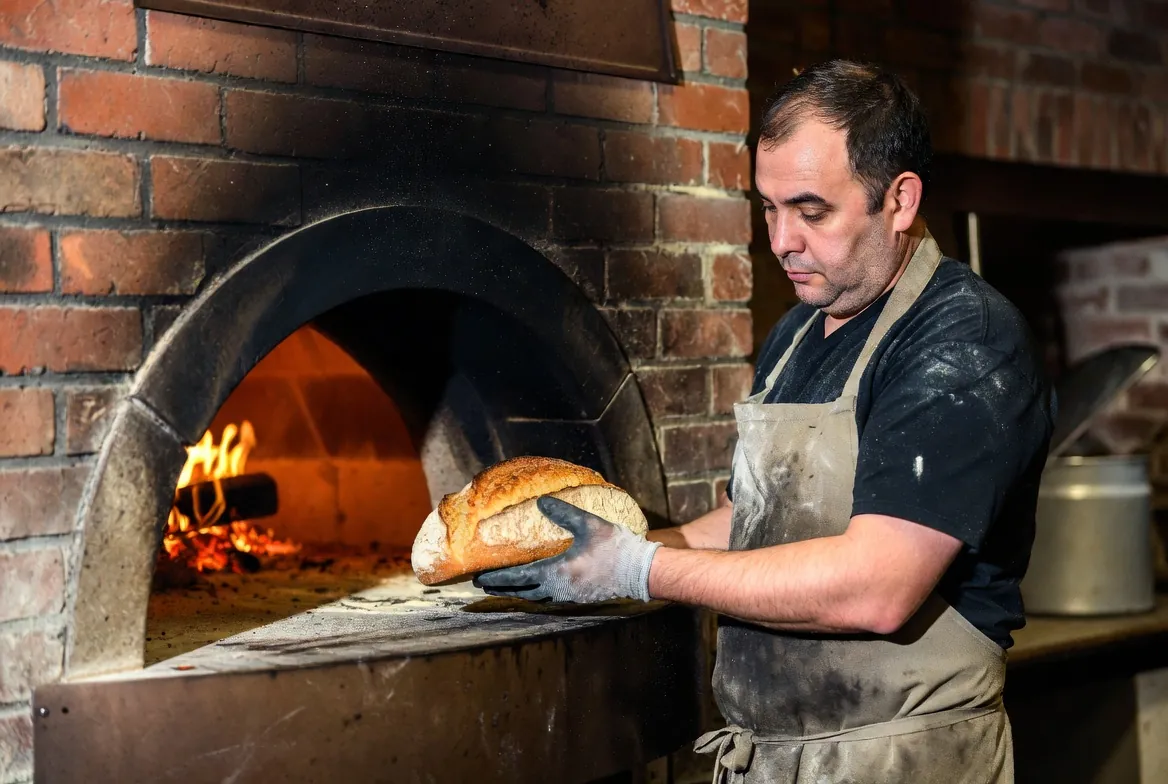
This is a first loaf, not a competition loaf. It will not look like the ones on Instagram, and it will still be better bread than most of the high street sells, because it will be made of flour, water, salt and time, and nothing else.
You need an active starter that doubles after feeding. If yours is not there yet, finish that guide first. The dough cannot borrow enthusiasm the starter does not have.
The five ingredients
- 400g strong white bread flour
- 100g wholegrain rye or wholemeal flour
- 350g water, lukewarm
- 100g active starter, fed that morning and doubled
- 10g fine salt
Weigh everything on scales. Bread recipes in cups are how dense loaves happen.
The method
1. Mix, early afternoon. Stir the starter into the water, add both flours, and mix by hand until no dry flour remains. It will be shaggy and sticky. Rest it for 30 minutes, then add the salt with a splash of water and squeeze it through. A dough scraper saves your hands here.
2. Fold, not knead. Over the next two hours, give the dough four sets of folds, one every 30 minutes. Wet your hand, grab the far edge, stretch it up and fold it over the middle. Quarter-turn the bowl, repeat four times, done in twenty seconds. Each round you will feel the dough turn from porridge into something with a spine.
3. Bulk prove. Cover the bowl and leave the dough somewhere warm until it has grown by about half, usually 2 to 4 more hours. It should look alive, domed and bubbled at the edges. This step decides the loaf. When in doubt, give it another 30 minutes.
4. Shape. Tip the dough onto a lightly floured surface. Fold the edges into the middle like an envelope, flip it seam-down, and drag it toward you to build a taut skin. Place it seam-up in a floured banneton or a bowl lined with a floured tea towel.
5. The overnight prove. Cover the basket and put it in the fridge. Go to bed. The cold slows the yeast while the bacteria keep working on flavour, and a cold dough scores far more cleanly in the morning.
6. Bake. Next morning, put your lidded cast iron pot in the oven and heat it to 230C for 45 minutes. Tip the cold dough onto baking paper, score the top about 1cm deep with a lame or a serrated knife, and lower it into the pot by the paper. Lid on, 20 minutes. Lid off, 20 to 25 minutes, until the crust is deep brown. Dark is flavour, pale is regret.
7. Wait one hour. The loaf is still cooking on the rack. Listen to it crackle. Do not cut it. This is the hardest step in the entire method and the one everyone fails first.
The honest checks
A crust that sings as it cools. A crumb with open holes and a bit of chew. A loaf that firms up over the next few days instead of staying eerily soft for a fortnight. That last one is the stale test, and passing it means you made the real thing.
Loaf two will be better. Loaf five will be bread you give away. And when you want to taste the ceiling, the sourdough bakers in the directory are the ones to copy, crumb by crumb.